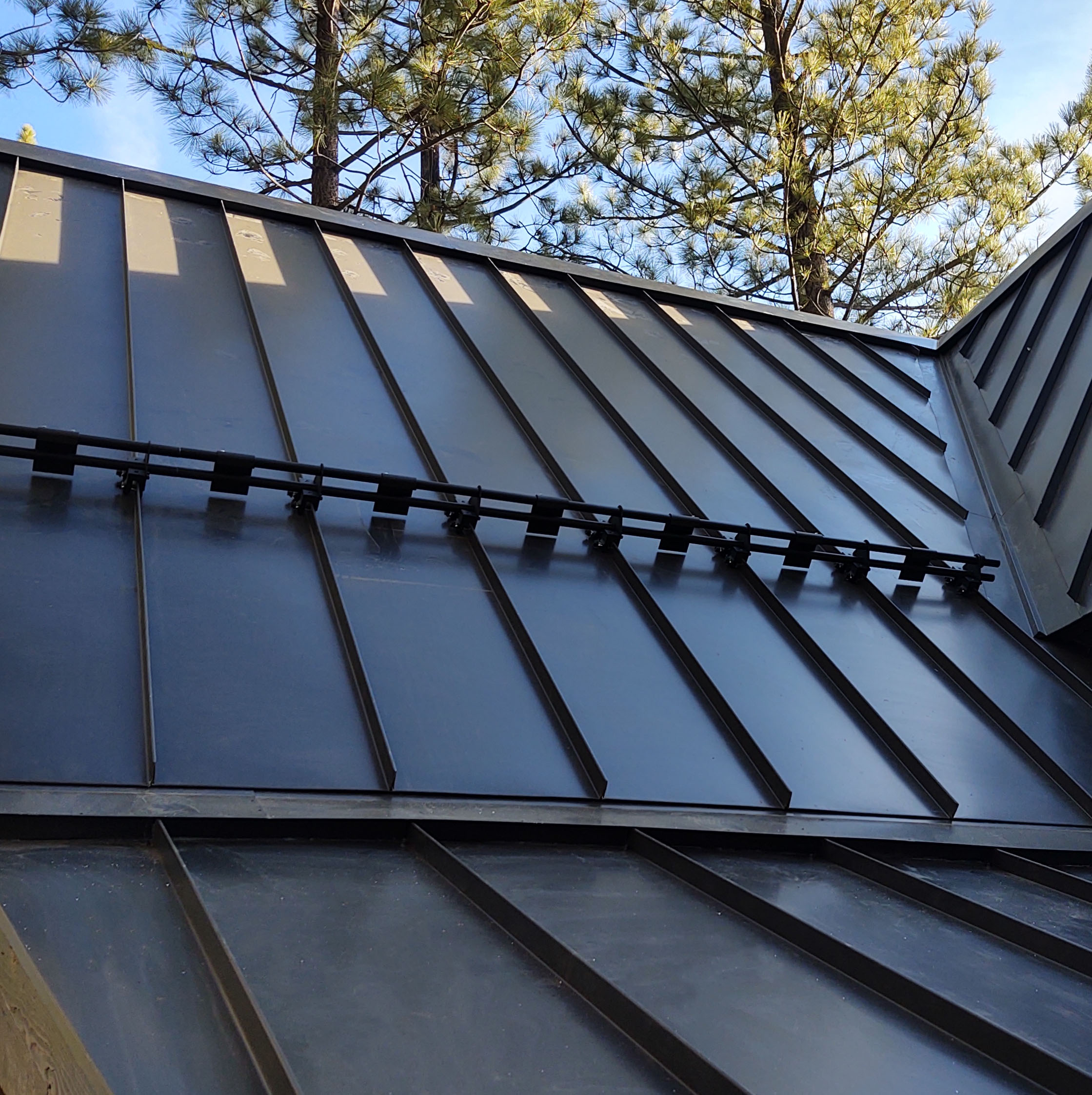
Challenges unique to large industrial roofs
Industrial roofs present challenges that smaller roofs do not, and for a Westport facility owner, understanding them clarifies what managing a large roof requires. These challenges all stem from the scale and complexity of industrial buildings, and addressing them is what keeps a big roof sound over its life.
Extensive equipment and penetrations
A large industrial roof often carries extensive rooftop equipment and the many penetrations that come with it, pipes, vents, conduit, and the curbs around large units, each a point the roof must seal and a potential leak source. The sheer volume of penetrations concentrates the leak risk. For a facility, the numerous penetrations and equipment curbs are a significant challenge, since they require careful sealing and ongoing attention. On a large roof with many of them, keeping all those points watertight is a substantial part of maintaining the roof, and the details around equipment are often where problems first appear, which makes regular attention to them important rather than optional on an industrial building.
Drainage across a large area
Draining a large roof is challenging, since the volume of water during heavy rain is substantial and must be moved off promptly to prevent ponding across large portions of the roof. Drainage problems at scale can affect extensive areas and cause widespread damage rather than a localized issue. For a Decatur County facility, the drainage is a persistent challenge, requiring adequate capacity, proper slope across the large area, and diligent maintenance to keep the drains and scuppers clear. On a large roof, inadequate or clogged drainage leads to ponding that can damage significant portions of the roof, which is why drainage deserves consistent attention on an industrial building rather than being addressed only when standing water becomes obvious.
Foot traffic and physical wear
Industrial roofs often see significant foot traffic and physical wear, as workers access rooftop equipment for maintenance and operations, concentrating wear at walkways and around units where the membrane can be damaged. This traffic is a common source of leaks on industrial roofs. For a Westport facility, the foot traffic is a real challenge, since the areas where people walk and work are prone to membrane damage. Protecting these high traffic areas, often with walk pads, and monitoring them helps prevent the damage related leaks they are susceptible to, which is a practical step that matters more on a busy industrial roof than on a building few people ever access for maintenance.
Weather exposure across a large surface
A large industrial roof presents a vast surface to the weather, sun, wind, rain, and temperature swings, all of which work on the roof across its entire area, so exposure related wear accumulates over a large surface. Wind in particular can stress a large roof's edges and membrane. For a facility, the weather exposure across the large area is a challenge, since the same conditions that wear a small roof act on a far greater surface, and problems can develop in many places. Regular inspection and maintenance across the whole roof, not just convenient areas, are what keep weather driven wear in check on a roof of industrial size.
Detecting problems on a vast roof
Finding problems on a vast industrial roof is itself a challenge, since a small issue can be hard to locate among hundreds of thousands of square feet, and a leak's interior location may be far from its source on the roof because water travels. Thorough inspection is essential and demanding at scale. For a Decatur County facility, detecting and locating problems requires systematic inspection of the large roof and its many details, since issues can hide on a vast surface. Regular, thorough inspection is important to catch problems that would otherwise go unnoticed until they cause significant damage, which is harder to find and more consequential on a roof of industrial size than on a small building.
Coordinating work over an active facility
Performing roof work over an active industrial facility adds a layer of challenge, since the work must be coordinated to protect the operations, equipment, and people below, often requiring phasing, scheduling, and care to avoid disruption. The active facility complicates every project. For a Westport facility, coordinating roof work with operations is a genuine challenge, since the building rarely shuts down for the roof, which is why industrial roofing is planned around the facility's activity, sequencing the work and managing it so the roof gets addressed without interrupting the operations that the roof exists to protect in the first place.
Managing the challenges of scale
The challenges of large industrial roofs, extensive equipment and penetrations, demanding drainage, foot traffic, weather exposure, detecting problems on a vast surface, and coordinating work over an active facility, all stem from scale and require diligent attention. For a facility owner, recognizing these challenges is key to managing the roof, since addressing them through proper maintenance, drainage care, traffic protection, thorough inspection, and careful coordination is what keeps a large industrial roof sound.
Across a large industrial roof, consistency in how the work is done matters as much as the materials, since the same detailing repeated correctly over a vast area is what keeps the whole roof watertight. For a Westport facility, a crew that applies the same care to every seam, flashing, and penetration across the roof delivers a result that performs uniformly rather than one that holds in some areas and fails in others, which is part of what doing industrial roofing well requires at scale.
Planning ahead for an industrial roof's eventual needs serves a facility well, since knowing roughly when restoration or replacement will be required allows the owner to budget and plan rather than face a sudden large expense. For a Decatur County facility, tracking the roof's condition over time through regular inspection turns major roof decisions into planned investments, which is far easier to manage than reacting to a failure, and it gives the operation the predictability that a large, expensive asset like an industrial roof deserves.
Get help managing your industrial roof
Westport Metal Roofing manages the challenges of Westport industrial roofs, from extensive penetrations and drainage to traffic protection and thorough inspection. Call {phone} to get help managing your large facility roof. Diligent attention to the challenges of scale is what keeps an industrial roof sound and your operations protected.